The Rigged Lottery Crime Story of Eddie Tipton
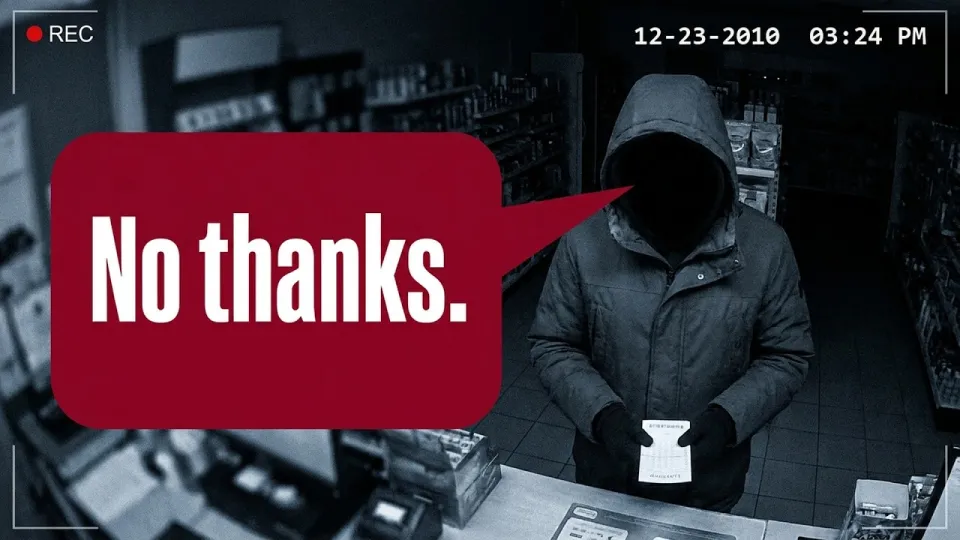
The crime story of Eddie Tipton is the tale of a man paid to protect a lottery who secretly rigged it. As information security director at the Multi-State Lottery Association (MUSL), Tipton helped run the random number generators behind games in dozens of states, then wrote code that let him predict winning numbers. He was caught not by a whistleblower but by a convenience-store camera and two ordinary words: "No thanks."
What the rigged lottery scheme actually was
MUSL is a nonprofit that supplies drawing equipment and random number generators to member state lotteries, and Tipton was the person responsible for keeping those systems secure. According to the Iowa Division of Criminal Investigation and court records, he inserted a rootkit — malware that hides its own presence — into the random number generator software. The code behaved normally on most dates but produced predictable, pre-selected numbers on specific days, which Tipton could look up in advance.
The draw computers were kept off the internet, so the compromise had to come from physical access: Tipton installed the manipulated software using removable media when he visited the secure draw room. The scheme worked because the man who audited the system was the man who had broken it.
The $16.5 million Hot Lotto ticket nobody claimed
On 29 December 2010, a Hot Lotto ticket bought at a Des Moines convenience store matched the winning numbers for a jackpot of roughly $16.5 million. Under the game's rules, the winner had one year from the draw to come forward, and for most of that year nobody did.
That silence was part of the design. Tipton was barred by MUSL policy from playing lottery games, and a jackpot claim would put his name — or the names of associates — in front of the very organization he worked for. The delay was meant to buy time to arrange a claim through a third party.
The lawyer, the trust and the deadline
With just over an hour left before the claim deadline, a lawyer walked into the Iowa Lottery headquarters in Des Moines and presented the ticket on behalf of an anonymous trust based in Belize. The trust wanted the prize paid without identifying a human being.
Lottery officials refused to pay until they knew who was behind the trust, and the standoff turned the ticket into a legal exhibit. The claim lapsed; the $16.5 million was never paid on that ticket. For investigators, the anonymous trust was the first real thread: someone with inside knowledge had tried to convert a rigged result into cash while keeping their identity out of the paperwork.
Two words that gave him away
In 2014 the Iowa DCI released security footage from the convenience store where the ticket was bought. It shows a man at the counter buying the Hot Lotto ticket and then declining something the clerk offers — a response captured as "No thanks." The clip aired on local news and was posted online.
Coworkers at MUSL recognized the man immediately: his voice, his build, the way he moved. The recording placed a lottery security official at the counter buying a game he was prohibited from playing. Two words, spoken casually to a clerk, undid years of careful planning.
How investigators proved the draws were manipulated
Proving a rigged draw is harder than recognizing a face, because the numbers themselves look random. The case rested on several converging strands of evidence:
- The random number generator software was examined and found to contain code that altered output on specific dates.
- The draw room was monitored by a camera that captured roughly one second of footage every minute, leaving gaps an insider could exploit — and showing who had access during them.
- Tipton's movements and computer activity were compared with the dates on which the manipulated numbers were designed to appear.
- The Belize trust and the people who tried to claim the ticket were traced back to him.
Tipton was arrested in 2015 and charged in Polk County. A jury convicted him, and the case then went to the Iowa Supreme Court on appeal, where the defense argued over the timing of the prosecution relative to the statute of limitations. The conviction was upheld.
The confession and the sentence
In 2017 Tipton pleaded guilty to ongoing criminal conduct, admitting that he had manipulated the code used to generate winning lottery numbers. He was sentenced to up to 25 years in prison and ordered to pay restitution. The $16.5 million Hot Lotto prize was never paid on the disputed claim.
The investigation did not stop with Iowa. Authorities in other states re-examined draws that fell on the dates the rigged code was programmed to favor, and associates who had claimed prizes on rigged tickets were prosecuted separately. The case forced lotteries to rethink how random number generators are audited, who can touch the machines, and whether a single employee should hold both the keys and the audit log.
Why the case still matters
The Tipton case is a reminder that the weakest point in a lottery is rarely the machine — it is the person with legitimate access to it. A security director who understood every control also understood exactly how to bypass them, and the scheme survived for years because the numbers it produced were genuine outputs of the official software.
It also shows how small details close big cases: a store camera of modest quality, a clerk's routine offer, and a two-word reply. Max Crime's breakdown of the case follows the timeline from the unclaimed ticket to the 2017 plea and shows how the investigation connected the draw room, the trust and the man in the footage.
Key takeaways
- Eddie Tipton was information security director at the Multi-State Lottery Association, the body that ran games for dozens of state lotteries.
- A Hot Lotto ticket worth $16.5 million was bought at a Des Moines convenience store in December 2010 and stayed unclaimed for nearly a year.
- Investigators released store CCTV in 2014; coworkers recognized Tipton's voice and gait, and the phrase "No thanks" helped place him at the counter.
- Tipton planted a rootkit on draw computers kept off the internet, letting him predict winning numbers on specific dates.
- He pleaded guilty in 2017 to ongoing criminal conduct and was sentenced to up to 25 years; the $16.5 million claim was never paid.
Source: He Rigged the Lottery. Two Words Gave Him Away. (crime story) · Markdown version
Questions & answers
How did Eddie Tipton rig the lottery?
He was information security director at the Multi-State Lottery Association and inserted a rootkit into the random number generator software used for games like Hot Lotto. The code produced normal results on most dates but predictable numbers on chosen days, so he could know winning combinations in advance.
How was Tipton caught?
Iowa investigators released convenience-store security footage of the man who bought the unclaimed $16.5 million ticket. Coworkers recognized his voice and mannerisms, and the recording captured him saying "No thanks" to the clerk. The anonymous Belize trust that tried to claim the prize was also traced back to him.
Was the $16.5 million Hot Lotto jackpot ever paid?
No. The ticket was presented through an anonymous trust shortly before the one-year claim deadline, but lottery officials refused to pay without knowing the beneficiary. The claim lapsed and the prize was never paid.
What happened to Tipton after his conviction?
He was convicted in Polk County, and the Iowa Supreme Court upheld the conviction after an appeal over the statute of limitations. In 2017 he pleaded guilty to ongoing criminal conduct, admitted manipulating the number-generating code, and was sentenced to up to 25 years in prison.